The Homebuyer’s Guide to 2026 Representation: What the Heck Are These New Agreements?
Chattanooga Robert Wills March 9, 2026
Chattanooga Robert Wills March 9, 2026
If you have started looking for a home recently in the Tennessee Valley or North Georgia, you may have noticed that things look a little different than they did a few years ago. Perhaps you reached out to an agent to see a beautiful craftsman in Northshore or a family home in Ooltewah, and before they could even grab the keys, they asked you to sign a document.
That document is a Buyer Representation Agreement. While these agreements have existed in various forms for decades, they became a standard, mandatory part of the real estate process across the country in late 2024 and throughout 2025. Now that we are well into 2026, these agreements are the foundation of how we help people buy homes.
Understandably, some buyers feel a bit hesitant when presented with a contract before they have even stepped foot inside a property. This guide is designed to pull back the curtain on these agreements, explaining why they exist, what they include, and why they are actually a major win for you as a consumer.
For a long time, the way real estate agents were paid was a bit of a "behind the scenes" arrangement. Typically, a homeowner selling their house would agree to pay a total commission to their listing agent, who would then share a portion of that fee with whichever agent brought the buyer. As a buyer, you might have felt like your agent’s services were "free."
In reality, nothing is truly free. The cost of professional representation was essentially baked into the sales price of the home. This lack of direct negotiation between buyers and their agents led to several class-action lawsuits. The core of the argument was that buyers should have more clarity and control over what they are paying for professional services.
The settlement of these lawsuits brought about the rules we follow today. Now, instead of agent compensation being tucked away in a database, it is discussed openly and agreed upon in writing between the buyer and the agent. This shift toward transparency is meant to ensure you know exactly who is working for you, what they are doing, and how much their expertise costs.

At its simplest, a Buyer Representation Agreement is a service contract. Just as you would sign a contract with a contractor to renovate your kitchen or an attorney to handle a legal matter, this document outlines the professional relationship between you and your real estate agent.
When you work with our team, this agreement serves as our commitment to you. It establishes our fiduciary duty, which is a fancy legal term meaning we are legally obligated to act in your best financial interest. Without a signed agreement, an agent may technically be working as a "sub-agent" for the seller, which is a position no buyer wants to be in during a negotiation.
Every agreement can vary slightly, but in 2026, most standardized forms in Tennessee and Georgia include these specific elements:
One of the most common questions we receive is: "Do I really have to sign this just to see one house?"
The answer, according to current regulations, is yes. Before an agent can provide "brokerage services", which includes touring a home, they must have a written agreement in place. This rule applies whether you are looking at a luxury estate on Signal Mountain or a starter home in East Ridge.
However, "signing an agreement" does not have to mean "committing for life." If you are just starting your search and aren't sure if a specific agent is the right fit, you can request a "Property-Specific" or "Touring Agreement." This covers you for a limited time or a specific list of addresses. It allows you to test the waters and see how the agent communicates and handles the tour before you commit to a long-term partnership.

This is where many buyers get nervous, but the reality is more flexible than it might seem. Just because you agree to a compensation amount in your representation agreement does not mean the money has to come directly out of your pocket at closing.
In the 2026 market, there are still three primary ways an agent’s compensation is covered:
The benefit of the 2026 system is that you know the number upfront. There are no surprises at the closing table. You and your agent will discuss the compensation before you ever write an offer, ensuring you can factor that cost into your overall budget.
While change can be uncomfortable, the move toward formal representation agreements offers several distinct advantages for homebuyers in the Tennessee Valley.
When you sign a representation agreement, the agent is officially "your" agent. They have a legal obligation to keep your information confidential and to fight for the best possible price and terms for you. Without this agreement, the lines of loyalty can get blurry.
By outlining services in writing, you get to see exactly what you are paying for. Real estate transactions have become increasingly complex. Between home inspections, title searches, and navigating financing in a fluctuating interest rate environment, having a dedicated professional is more important than ever.
These agreements elevate the standard of the industry. They encourage agents to be more transparent about their value and encourage buyers to be more intentional about who they choose to represent them. It turns the home-buying process into a professional partnership rather than a series of casual tours.

Choosing who will represent you is a big decision. Whether you are looking for a quiet spot in Apison or a vibrant community in East Brainerd, you deserve an agent who explains these documents clearly and makes you feel comfortable.
At Robert Wills Properties, we believe in a simple, straightforward approach. We take the time to sit down with our clients to go through the representation agreement line by line. We want you to understand your rights, our obligations, and how we plan to get you into your next home.
The 2026 real estate landscape is built on transparency. While the paperwork might seem a bit more formal than it used to be, the goal is to protect you, the consumer. By clearly defining the relationship from the start, we can focus on what really matters: finding the perfect property for your lifestyle and ensuring a smooth transition into your new home.
If you have questions about these new agreements or are ready to start your home search in Chattanooga or North Georgia, please reach out to us. We are here to guide you through every step of the process with clarity and confidence. You can explore our current listings or learn more about our local communities through our sitemap to get a feel for the current market.
Professional representation is not just about opening doors; it is about protecting your future. We look forward to showing you the value that a dedicated partner can bring to your journey.

Chattanooga
Discover the "City with Spirit" – the Tennessee Valley's best-kept secret for families, investors, and anyone tired of the "big city" price tag.

Chattanooga
Why waiting for the "perfect" number might actually cost you more in home price and competition than you’ll save in interest.

Chattanooga
Moving past the "bubble" talk and understanding the steady, sustainable growth of the 2026 real estate landscape in the Tennessee Valley and North Georgia.
Chattanooga
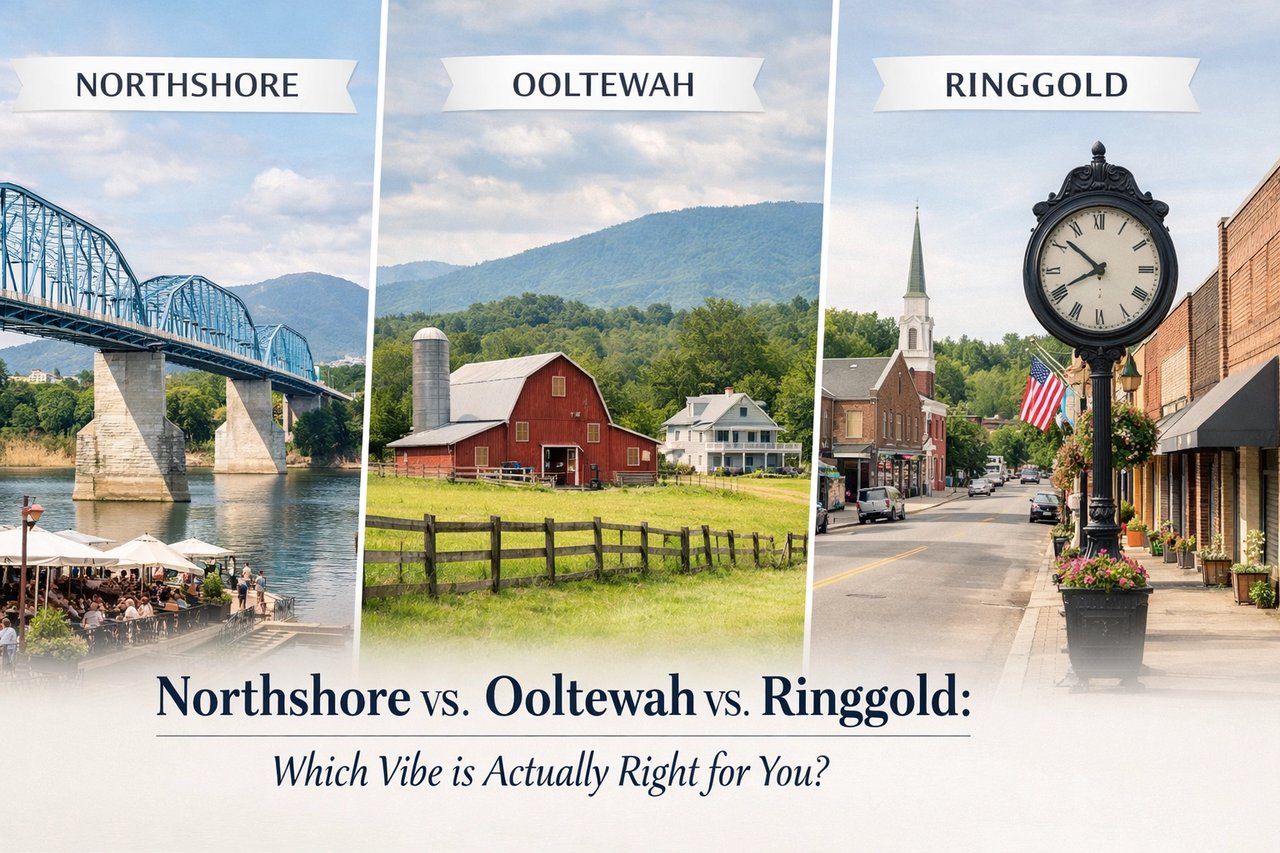
From urban walkability to suburban convenience and small-town charm—finding your perfect spot in the Tennessee Valley.

Chattanooga
The truth about timing the market and why waiting for a "perfect" rate might cost you more in the long run.
Chattanooga
Everything you need to know about the new way we’re helping buyers find their dream homes.

Chattanooga
Don't let rising premiums sneak up on you at the closing table.

Chattanooga, TN
A guide to the unique lifestyles and communities that make the Tennessee Valley feel like home.

Chattanooga
ore options, less frenzy. Here’s how to navigate the Tennessee Valley’s growing inventory this season.
Work with a dedicated real estate professional with deep roots in Chattanooga, who combines local expertise, a passion for client satisfaction, and cutting-edge technology to make your home-buying experience seamless and stress-free.